Build a Base and We'll Read Your Whole Approach
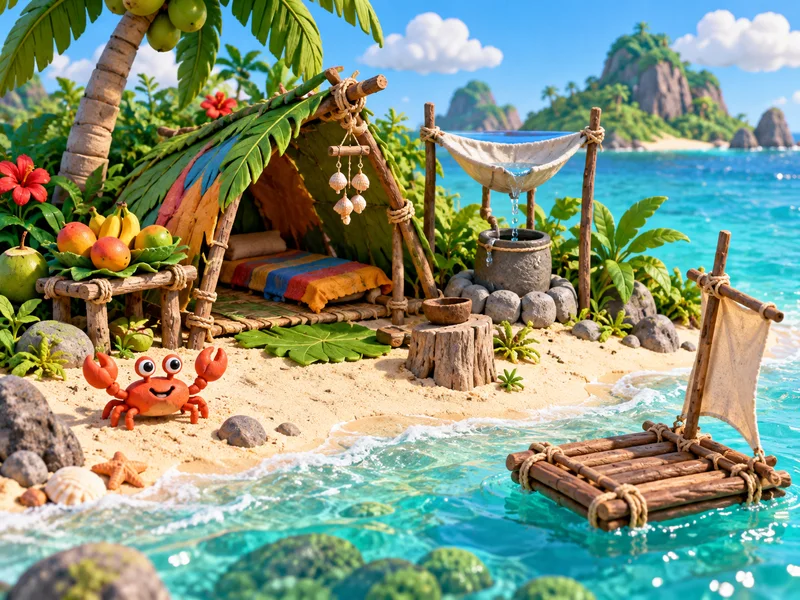
Every player builds a first shelter, and almost nobody builds the same one. Some dig, some stack, some spend the whole first night gathering wood for a floor plan they have already drawn in their head.
These six questions walk through the choices a sandbox world quietly asks of you: where to sleep, what to do with good stone, how much of the place is for defence and how much is for show. Answer as you actually play, not as you wish you played, and the result will be far more use.
See all the outcomes this quiz can land on, and what each one means →
From bonus feature to the whole product
Level editors are older than most people assume. Home computer games were shipping them in the early 1980s, when the idea that you might design and save your own stages was novel enough to be worth printing on the box. For years the editor stayed a bonus: something bundled for the small minority of players who wanted to make things rather than finish them.
What changed was the status of the tool. When a landmark 1993 shooter stored its maps in separate data files, players reverse-engineered the format and released their own editors within months, and the studio later published the engine source outright. A generation of level designers trained itself that way, unpaid and unsupervised, and a good number went on to ship commercial work. By the mid-2000s there were platforms with no campaign at all, only a toolset, a server and a publish button. Building had stopped being what you did after the game and become the game.
Constraints are what give a style its shape
Ask why sandbox architecture looks the way it does and the answer is usually the toolbox rather than the taste. A world made of unit cubes makes right angles free and curves expensive, so builders invent workarounds: stepped slopes, deliberate asymmetry, blocks chosen for their texture rather than what they are supposed to be. The material palette a game ships with becomes the visual language of everything anyone makes in it, which is why worlds built in the same engine share a family resemblance even when nobody is copying anybody.
Scarcity does the rest. A wall you have to mine is a wall you think about twice, and survival modes reliably produce leaner buildings than creative modes do. Hand players unlimited materials and the average build gets larger, more symmetrical and much less defensible. Take the materials away and you get burrows, chokepoints and roofs made of whatever was to hand. Neither is better. They are different games wearing the same skin.
What six questions can and cannot see
A quiz reads your answers, not your worlds. It cannot know that you build fortresses because your first server had raiders on it, or that you dig because you are impatient rather than cautious. Building habits also drift: most players cycle through several across one long save, and the shelter you throw up in a panic on night one says more about the daylight left than about you. Take the result as a snapshot of a mood, then go and look at what you have actually built if you want the honest version.
Research notes & further reading
The explanatory section above was checked against this reading trail.
More quizzes to try