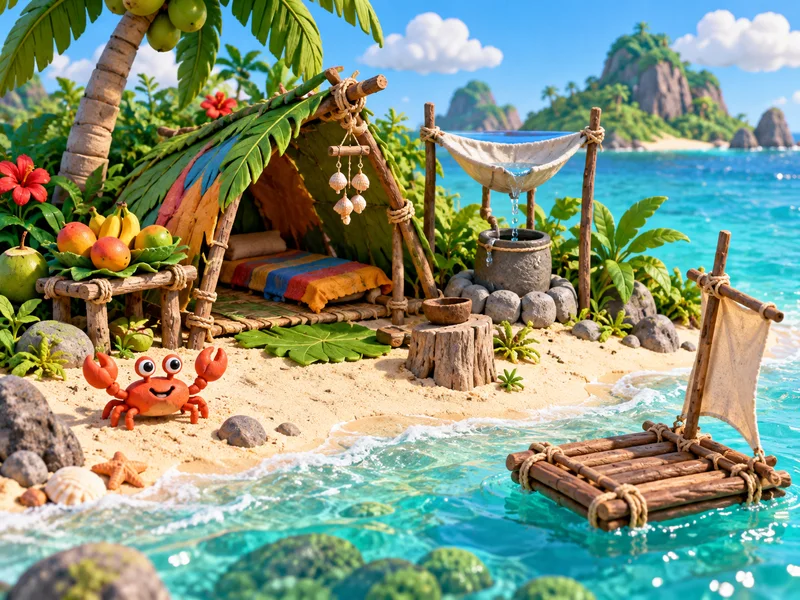
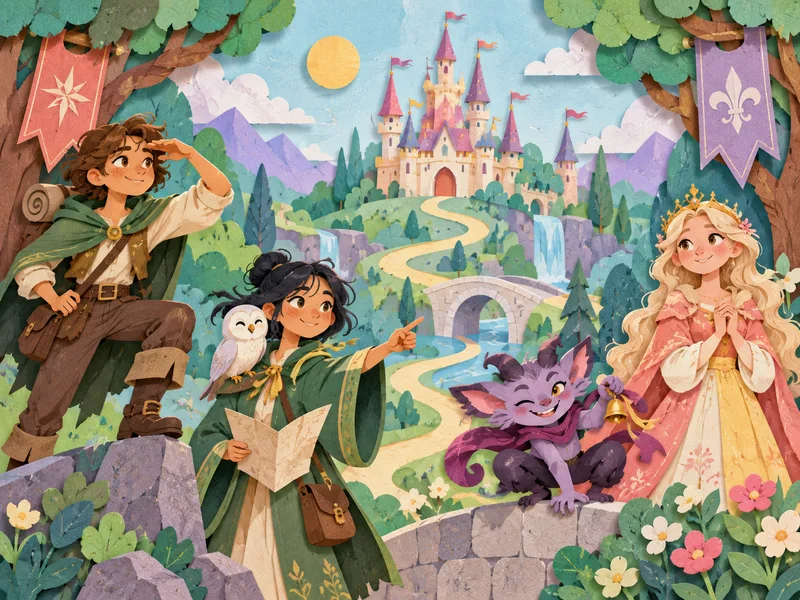
Pick a Plot of Land and We'll Guess Your Home
Before there is a house there is a piece of ground, and most players know within a few seconds whether a site is theirs. A ledge over open water. A flat green bank. A gap in a row of buildings that somebody else already put up.
These seven questions start with the land and work upwards: what goes in first, which way the door faces, how much of the place ends up underground, and who you expect to turn up at it. By the end we will have described the home you keep building, whichever world you happen to be in.
See all the outcomes this quiz can land on, and what each one means →
Two ways to give everybody a home
Player housing splits along a single architectural decision. Instanced housing gives each player a private space reached through a door or a menu: unlimited, always available, and permanently without neighbours. Open-world housing puts the house on the shared map, where it can be visited, admired and, crucially, run out. The first scales infinitely and feels detached. The second is scarce and therefore means something. Studios have shipped both, sometimes inside the same product, and the trade-off stays unresolved because it is not really solvable.
Instanced homes also let designers hand out interiors far grander than the world could physically hold, such as a tower with more floors inside than the building has from the street. Players notice this immediately and mostly forgive it, which tells you something about how little architectural consistency matters next to having somewhere of your own.
What happens when the land runs out
Worlds with finite plots inherit every problem real property has. Desirable ground near roads, water or a town centre gets claimed within hours of a server opening, often by people with no intention of building anything and every intention of reselling. Abandoned houses then clutter the map and lock up the best sites indefinitely. The usual remedy is upkeep: a periodic tax or maintenance cost which, left unpaid, marks the plot for reclamation, generally with a grace period and a warning first.
Decoration systems bring limits of their own, and those are not arbitrary either. Every placed object costs memory and drawing time for everyone standing nearby, so item caps exist to stop one enthusiastic builder rendering a whole district unplayable on modest hardware. Builders treat the cap as part of the puzzle, rather as a poet treats a line length, and the workarounds, such as clipping objects into each other or using one large piece where three small ones would do, become craft techniques passed around in guides.
A plot is a mood, and moods move
Choosing a clifftop over a quiet street is a preference expressed in about nine seconds, and it deserves to be held that lightly. Housing decisions in shared worlds are shaped by who else is around, how safe the server feels and whether you happen to be sociable that month. What the choice does reliably reveal is what you want from the next few evenings: privacy, a view, neighbours, or a project with an awkward slope in it. That is a small truth rather than a grand one, but it is real, and it is worth more than a label.
Research notes & further reading
The explanatory section above was checked against this reading trail.
More quizzes to try