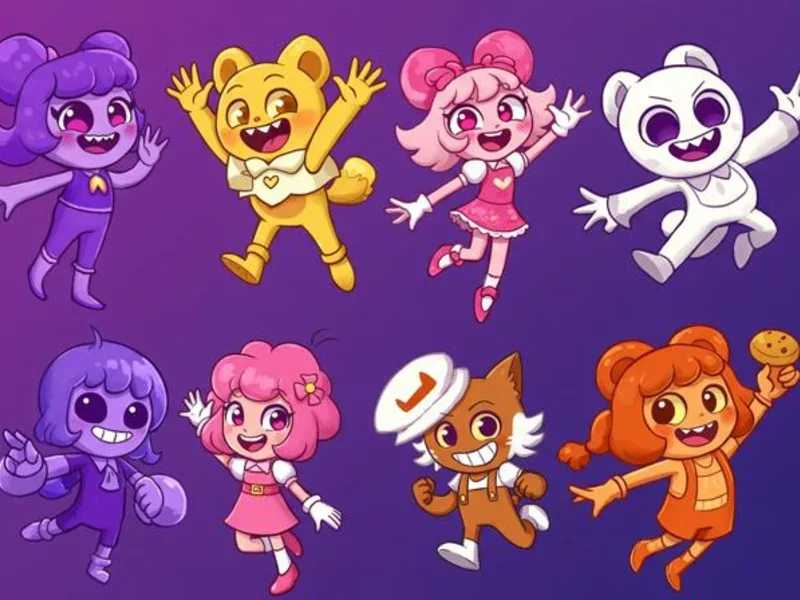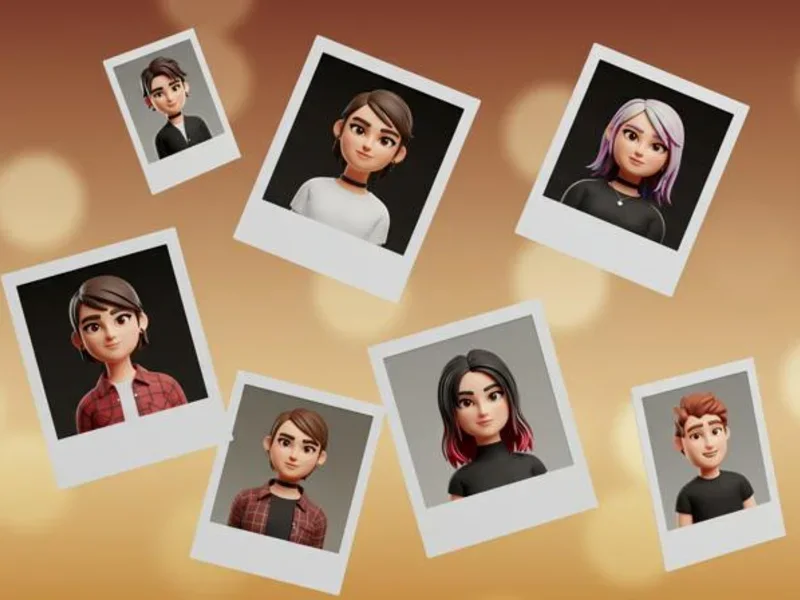
The format should have died several times over. It survived the collapse of print circulation, the arrival and departure of at least three dominant social platforms, and a long stretch during which taking one was mildly embarrassing. It is still here. Somebody, somewhere, is at this moment being told which member of a fictional household they most resemble, and is about to tell four people about it. The persistence is the interesting thing, and it is not adequately explained by saying the format is easy to make. Plenty of easy things vanish.
Two machines with one interface
It helps to separate the character quiz from its better-documented cousin. The scored questionnaire, the sort that tallies points and places you on a scale, descends fairly directly from psychological measurement, and the resemblance is deliberate: numbered items and a total at the bottom look like instruments, and looking like an instrument was the point.
The character quiz works differently underneath, even when it wears the same clothes. It does not measure a quantity; it sorts you into a bucket. There is no more or less of anything, no continuum, and no meaningful sense in which one result sits between two others. This matters more than it sounds, because it changes what the answer is for. A score invites comparison against a norm, which is a lonely activity. A category invites comparison against other people who got different categories, which is a social one. The whole downstream behaviour of the format follows from that single design decision.
Knowing somebody who cannot know you
The reason a fictional bucket works at all is that audiences accumulate something remarkably like acquaintance with people who do not exist. The concept usually invoked here arrived in 1956, when Donald Horton and R. Richard Wohl published an analysis of mass communication describing what they termed para-social interaction: broadcasting stages an imitation of face-to-face conversation, the performer addresses the viewer as though personally, and the viewer responds with the reciprocal habits of an actual relationship that the other party cannot possibly return.
That paper is now cited constantly and read rarely, and the gap has produced a persistent misreading. In popular usage parasocial has drifted into a term of diagnosis, deployed to describe someone whose attachment to a public figure has gone wrong. That is not what the original argument said. Horton and Wohl were describing an ordinary and expected consequence of how broadcast media are constructed, a normal response to a form built specifically to elicit it, not a defect in particular viewers. The mechanism is the medium's, not the audience's.
Media researchers have since spent considerable effort tidying up the concept. A conceptual review published in Human Communication Research, assessing how the term has been measured, argues that two distinct things have been routinely conflated: the interaction that happens during exposure, in the moment of watching, and the enduring relationship that persists between exposures and shapes how you think about a figure when they are nowhere in sight. Instruments purporting to measure one have frequently been measuring the other. For the quiz, only the second thing matters. A character quiz is not asking about a moment of viewing. It is asking you to consult a stable impression you have been assembling for years.
Identification is a separate thing again
There is a further distinction that gets lost, and it is the one that actually powers the format. Liking a character, feeling you know them, and identifying with them are three different psychological states, and a survey of the concept in Mass Communication and Society, setting out a working definition of identification, argues that identification specifically involves temporarily adopting a character's perspective and goals, with a corresponding drop in self-awareness, rather than merely evaluating them favourably from outside.
That distinction explains a familiar and otherwise odd experience: the result you get is often not the character you like most. People are frequently assigned the abrasive one, the anxious one, or the one whose decisions they spent whole seasons objecting to, and report that the answer felt uncomfortably correct. Liking would predict the charming result. Identification predicts the accurate one, and the two rarely coincide, which is exactly why the format keeps producing outcomes that feel like information rather than flattery.
A third body of work explains why the whole exchange feels good rather than merely diverting. The self-expansion model, developed by Arthur and Elaine Aron and reviewed at length in the Oxford Handbook of Close Relationships, proposes that people are motivated to enlarge the self, and that close relationships accomplish this by incorporating another person's perspectives and resources into one's own self-concept. Researchers have extended the framework to attachments formed with figures encountered through media. Being told you share something with an admired character is, on this account, a small annexation: you acquire a trait you can now legitimately claim, and it arrives pre-approved by everybody else who admires the same person.
What makes a result travel
Accuracy and shareability are different specifications, and a quiz optimised for one is usually worse at the other. Anyone who has watched a well-researched result sit untouched while a glib one circulates for a week has seen the divergence in action.
A shareable result has four properties. It is short enough to be said aloud in one breath. It is a proper noun, which means it carries meaning to anyone familiar with the source without further explanation. It is contestable, in that people who know the same material will have views about whether the verdict is right. And it says something about the person that they would not have volunteered unprompted, which is the crucial one. Self-disclosure normally costs something; a quiz result is a disclosure with the cost removed, because the quiz said it, not you. Sharing an unflattering result is a way of describing yourself honestly while retaining the option of blaming the algorithm.
Contestability does the heaviest lifting. A result nobody can argue with terminates the conversation, which is a failure. A result that provokes immediate flat denial from a friend produces an exchange, and exchanges are what actually spread. This is why the distribution of outcomes matters so much to whoever designs the thing. If a quiz assigns most takers the same answer, it stops functioning as a sorting device and becomes a broadcast, and nobody forwards a broadcast. Rare results have to stay rare or the whole social apparatus deflates.
The format is doing something real
It is tempting to file all this under harmless nonsense, and the quizzes themselves generally encourage that reading, which is sensible of them. But the underlying activity is not trivial. Working out which of a set of people you resemble is an act of self-description performed against a shared reference, and shared references are in short supply. Fiction supplies a cast that a great many people know in comparable detail, which makes it one of the few available common vocabularies for talking about temperament without recourse to jargon.
Held loosely, that is a decent thing for an entertainment to be. The quiz is not measuring you. It is handing you a borrowed word for something about yourself, and inviting somebody who knows you to disagree with it. That has been a good evening's entertainment for a very long time, and there is no obvious reason it should stop being one.